Description
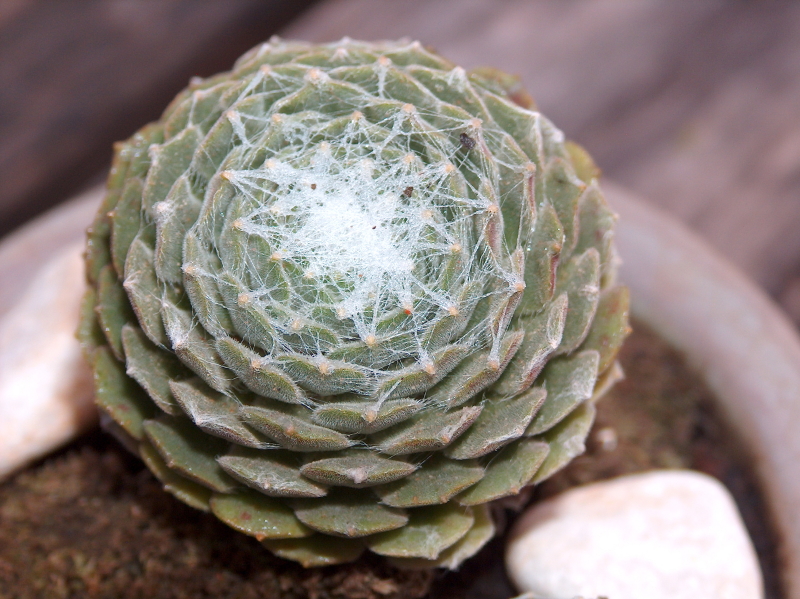
Sempervivum arachnoideum is a compact succulent with rosettes of green leaves and long, ciliate leaf margins that resemble spider webs. It readily forms offsets that create tight clumps or wide mats over time.
| |
| |
Cobweb Houseleek, Spider Web Hens & Chicks
| |
Mountains of Southern & Central Europe
| |
| |
| “Soak and dry” method (Make sure soil is dry)
|
| |
Skin Conditions
The fresh leaves can be applied as a poultice to minor cuts, burns, skin irritations, and other skin problems. They can also help treat sunburns and insect bites. The leaves may soothe and heal the skin, much like Aloe vera does.
Other Uses
Cobweb Houseleek has been historically used to treat ear infections, toothaches, warts and corns. Some sources suggest that it may also treat shingles, skin issues, haemorrhoids, and even stop nose bleeds. However, it’s important to use it carefully since excessive use can cause vomiting or diarrhea according to PFAF.org.
Preparation
The leaves are best used fresh, as they are difficult to dry properly. They can be crushed and applied directly to the skin, or their juice can be extracted for application. In some cases, the leaves are soaked in vinegar to treat warts and corns.
Internal Use
Sempervivum is used externally. However, it’s important to exercise caution and consult a healthcare professional before using it internally.
The traditional uses of this plant are well-known, but there’s limited scientific proof to support all of the claims. However, some studies show that the plant is high in antioxidants and phenolic compounds. It also possesses antimicrobial and anti-inflammatory properties, suggesting potential health benefits.